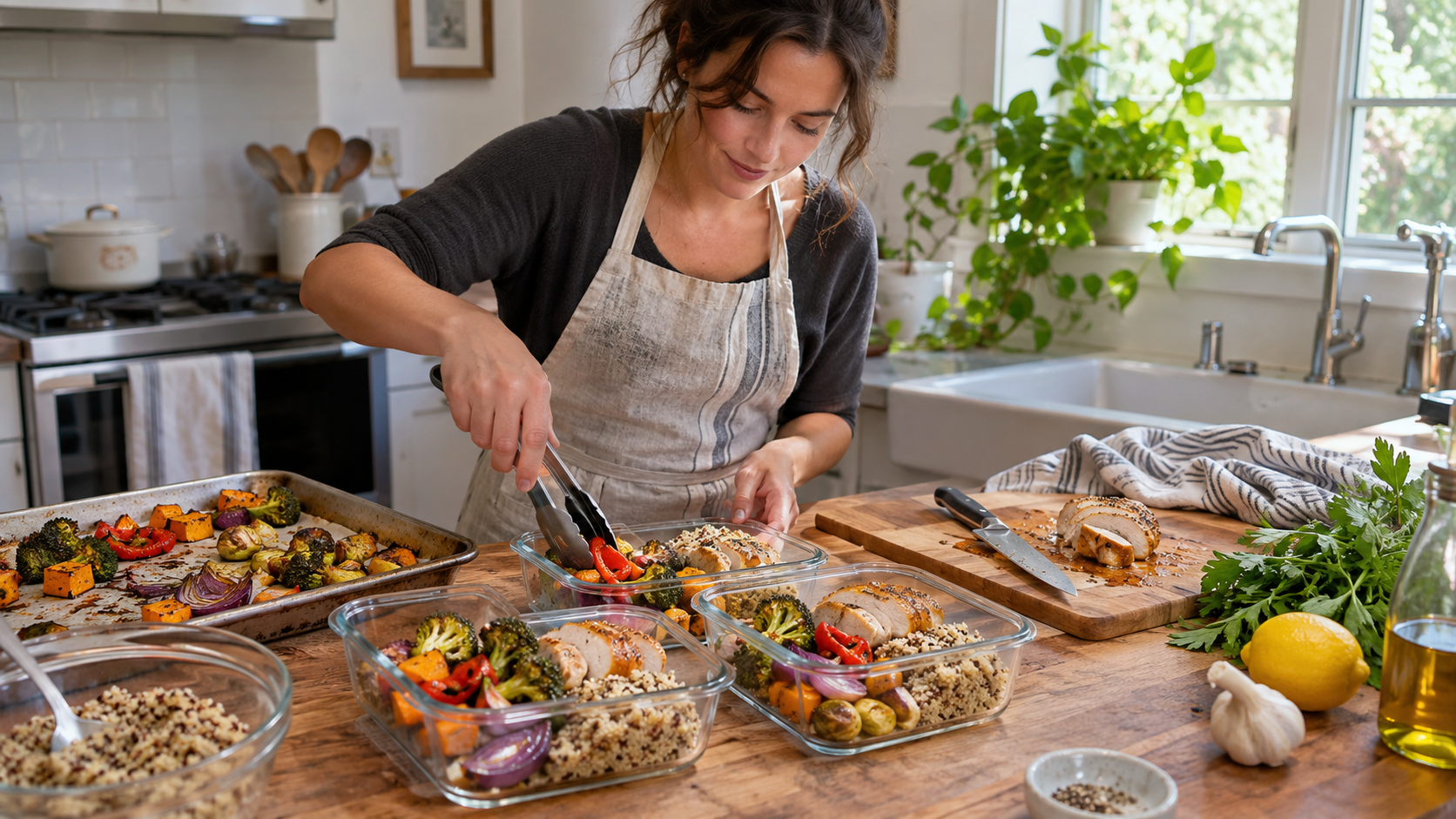
The best easy meal prep ideas are simple, flexible and built around a few base foods you can mix and match all week. Think cooked grains, a tray of roasted vegetables, a protein and a couple of sauces. Spend one or two hours on a quiet day and weekday dinners practically assemble themselves.
That’s the whole appeal. You aren’t cooking seven different meals in advance. You’re preparing building blocks, then combining them in ways that don’t feel repetitive. This guide shows which ideas work best, how to get started, how to store food properly and which common mistakes quietly ruin a good plan.
What Is Meal Prep and Why Does It Help?
Meal prep means cooking or prepping parts of your meals ahead of time so that eating well takes less effort later. It can be full meals in containers or just chopped vegetables and cooked rice waiting in the fridge. Either way, the goal is to remove daily decisions when you’re tired.
Leo Foods describes the classic problem well in its guide to weeknight dinners: it’s 6:15 pm, you’re tired, and the fridge looks half empty. Meal prep is the quiet fix for that moment. Your future self opens the fridge and finds a head start instead of a puzzle.
Which Meal Prep Ideas Work Best?
The easy meal prep ideas that work best reheat well and stay fresh for several days, and a different sauce or topping can change their flavour entirely. Start with one idea per meal rather than a plan for every day, and add more as your confidence grows. Variety comes from sauces, not from cooking twenty separate dishes.
Breakfast Ideas
- Overnight oats in jars, with fruit added on the day
- Egg muffins baked in a tin
- Breakfast burritos wrapped and chilled, or frozen
- Yoghurt pots topped with seeds and fruit
Lunch and Dinner Ideas
- Grain bowls with roasted vegetables and a protein
- Big batch soups or stews portioned into containers
- Sheet pan chicken or tofu with vegetables
- Pasta salads dressed just before eating
- Chilli or curry with rice portioned separately
One sauce can carry a lot of weight. The same roasted vegetables taste completely different with a tahini dressing on Monday and a spicy tomato sauce on Wednesday. Keep two or three sauces on hand and you’ve got variety without any extra cooking.
How Do Beginners Start Meal Prep Without Feeling Overwhelmed?
The simplest approach to meal prep for beginners is to start small: prep just two or three meals for the week, using recipes you already know. Resist the urge to build a perfect plan on day one. A modest first attempt teaches you how long things take, how much you actually eat and which foods you enjoy reheated.
Say you work office hours and dread weekday lunches. On Sunday you roast a tray of vegetables, cook a pot of rice and bake some chicken thighs. That’s one session of cooking, and then from Monday to Thursday, lunch takes minutes to assemble. Nothing fancy happened. You simply decided once.
A Simple First Week Routine
- Choose two meals you already enjoy and write the ingredients down.
- Shop once, with a list, so you don’t buy extras.
- Cook the base foods in one session, using the oven and hob together.
- Cool everything quickly, portion it into containers and label them.
Keep a short note afterwards about what ran out first and what got ignored. Those notes shape next week’s plan better than any template. Leo Foods also has a piece on essential cooking techniques for home cooks, which is handy if basics like roasting and seasoning still feel shaky.
How Do You Store and Reheat Prepped Food Safely?
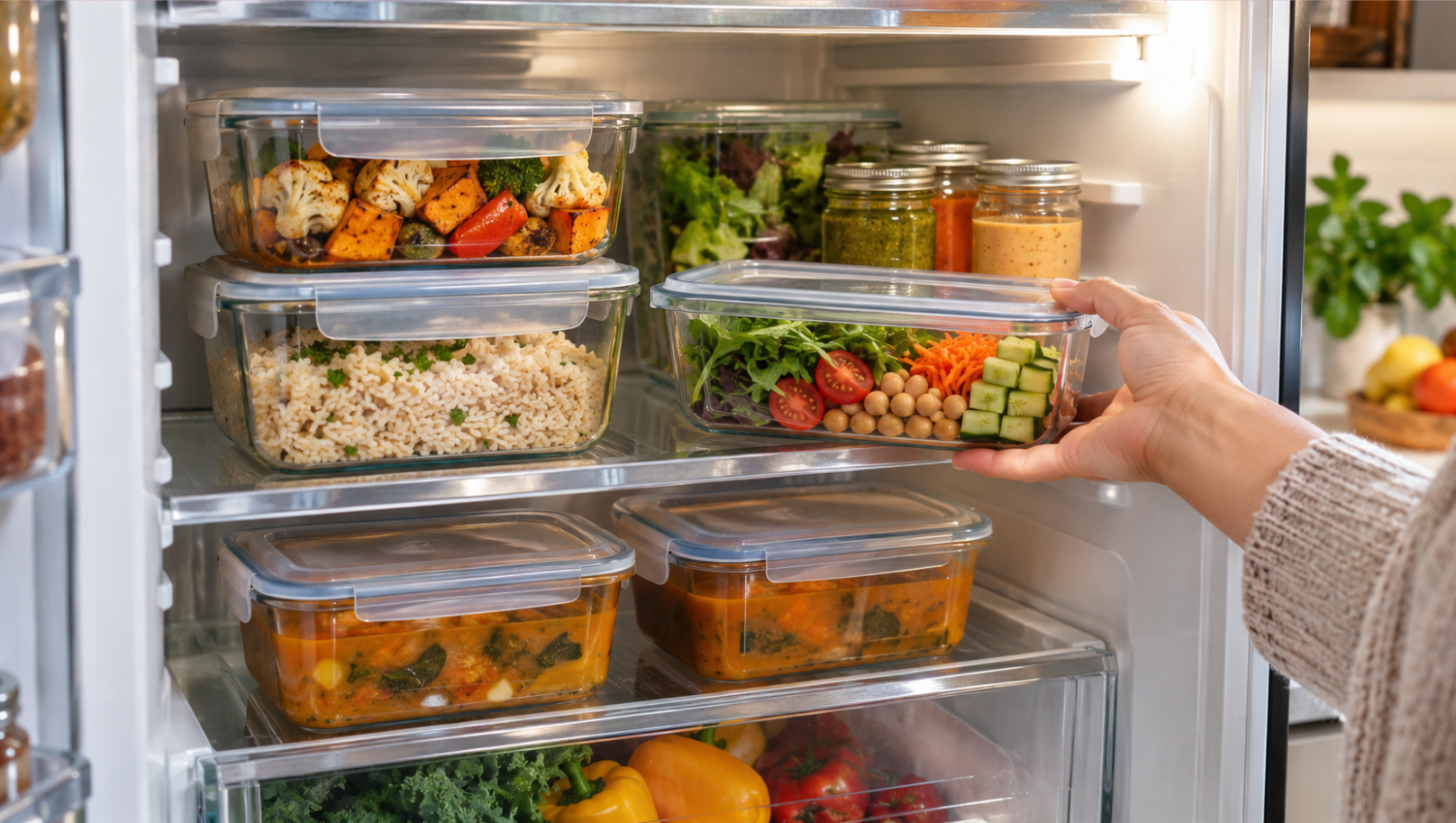
Cool cooked food quickly, then get it into the fridge rather than leaving it on the counter. Use clean, airtight containers, label them with the date and keep raw and cooked foods apart. For storage limits, follow official food safety guidance for your country, because times differ by food type.
When reheating, make sure food is steaming hot all the way through, and only reheat it once. If something smells or looks off, don’t gamble on it. Freezing is a good option for soups, stews and cooked portions you won’t eat within a few days.
Containers and Tools Worth Having
- Airtight containers in a couple of sizes
- Freezer safe bags or tubs
- A permanent marker and masking tape for labels
- One large baking tray and one big pot
What Mistakes Do People Make When They Start?
The most common mistake in meal prep for beginners is doing too much. A five day plan with ten recipes burns people out by Wednesday. Another is prepping food nobody wants to eat again, so the containers just sit there. Keep the menu small, repeat what works and treat the first few weeks as practice.
Soggy food is another trap. Keep wet items like sauces, dressings and salad toppings separate until you eat. Crisp foods lose their texture fast when sealed with moisture. A tiny extra container for dressing is a small effort that pays off at every meal.
Conclusion
Easy meal prep ideas aren’t about perfection or fancy gear. They’re about making your future self’s evening a little easier. Pick two or three base foods, add a sauce you like and give the routine a couple of weeks before judging it. You’ll find your own rhythm quickly.
If you’re following a meal prep for beginners plan, remember to keep it small and storage safe, then adjust as you go. Browse the Foods and Food and Drink sections on Leo Foods for more everyday cooking inspiration, and choose one idea from this guide to try this weekend.
FAQs
How long does meal prep take?
It depends on how many meals you prepare, but a small first session is quicker than most people expect. It also gets faster with practice, especially once you’ve settled on a few favourite recipes.
What are the easiest foods to meal prep?
Cooked grains, roasted vegetables, soups, stews, overnight oats and boiled eggs are all simple starting points. They reheat or keep well, and you can change their flavour with different sauces.
How should I store prepped meals?
Cool them quickly, then keep them in airtight, labelled containers in the fridge. Freeze extra portions you won’t eat soon, and follow official food safety guidance for storage times.
Do I need special equipment for meal prep for beginners?
No. A pot, a baking tray and a few airtight containers are enough to begin. You can add more tools later if the routine sticks.